In the world of industrial applications, Cold Forged Bearings are really making a name for themselves thanks to their impressive performance and durability. As things keep evolving in the industry, experts are more and more pointing out just how many advantages these bearings bring to the table. I read a quote from Dr. Sarah Thompson, who’s pretty much a go-to authority on bearing tech, and she said, "The precision and strength we get through cold forging seriously boost the reliability of bearings, especially in tough environments." Honestly, it’s pretty compelling stuff.
Looking ahead to 2025, it’s super important for both manufacturers and buyers to understand what makes Cold Forged Bearings a pretty solid choice. They’re built to handle heavy loads, resist wear-and-tear, and actually help extend the lifespan of machinery. This guide is here to break down what you need to know—covering the key features, benefits, and what to watch out for when choosing the right cold forged bearings for your specific project. We’re aiming to give you the insights so you can make smarter decisions, especially in a marketplace that’s getting more competitive all the time.
By checking out the latest advancements and expert insights, we want to show just how vital Cold Forged Bearings are going to be in shaping the future of industrial tech. It’s an exciting time, and these bearings are definitely a big part of it.

Top Cold Forged Bearings: Overview of Technology and Applications
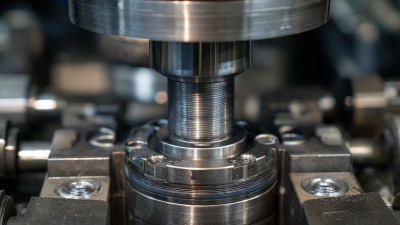
Cold forging technology has revolutionized the manufacturing of bearings, providing significant advantages in terms of strength, precision, and overall performance. Unlike traditional forging methods, which often involve heating the metal to high temperatures, cold forging processes shape materials at room temperature. This results in finer grain structures and improved mechanical properties. According to a recent industry report from Research and Markets, the global cold forged bearings market size is expected to reach USD 8.5 billion by 2025, reflecting a compound annual growth rate (CAGR) of approximately 4.7% from 2020 to 2025.
The applications of cold forged bearings span several industries, including automotive, Aerospace, and industrial machinery. These bearings are increasingly utilized in high-stress environments due to their enhanced fatigue resistance and reduced wear. Data from a study conducted by Grand View Research indicates that cold forged bearings are particularly favored in automotive applications, where lighter weight and improved performance directly contribute to fuel efficiency and emission reductions. Furthermore, as the demand for more durable and reliable components grows, the adoption of cold forged bearings is predicted to escalate, driving innovation and technological advancements within the sector.
Key Benefits of Cold Forged Bearings Over Traditional Bearing Methods
Cold forged bearings are rapidly gaining traction in various industries, showcasing significant advantages over traditional bearing manufacturing methods. One of the primary benefits is their superior mechanical properties. According to a report by the American Society for Materials and Testing, cold forging enhances the material's strength through work hardening, resulting in a finished product that often exhibits a tensile strength up to 30% greater than that of bearings produced via conventional machining. This leads to improved durability and longer lifespans, making them an attractive option for applications subjected to high stress.
Additionally, cold forged bearings offer enhanced dimensional precision and surface finish. A study published in the Journal of Manufacturing Science and Engineering noted that the dimensional tolerances of cold forged components can be held tighter than those achieved with traditional methods, often within ±0.05 mm. This precision not only reduces the need for secondary machining processes but also minimizes maintenance costs over the life of the bearing. Furthermore, the reduced waste associated with cold forging contributes to more sustainable manufacturing practices, aligning with increasing industry standards for environmental responsibility. As a result, the adoption of cold forged bearings is expected to rise, driven by both performance and sustainability considerations.
Factors to Consider When Choosing Cold Forged Bearings
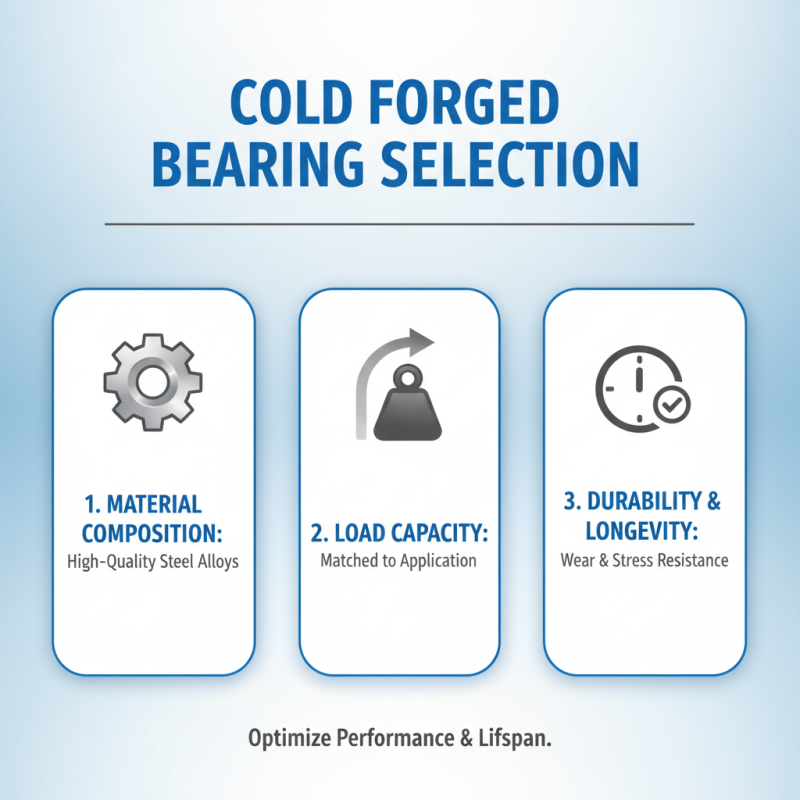
When selecting cold forged bearings, several critical factors must be considered to ensure optimal performance and longevity. Firstly, material composition plays a vital role in the bearing's overall durability and load-bearing capacity. Cold forged bearings are typically made from high-quality steel alloys, which provide excellent resistance to wear and deformation under stress. It’s essential to understand the specific application requirements and match the bearings with the appropriate material grade to maximize their performance.
Another important aspect is the design specifications of the bearing. This includes factors such as load ratings, dimensional tolerances, and lubrication requirements. Buyers should analyze the operational conditions, including speed, temperature, and exposure to contaminants, as these can significantly influence the choice of bearing design. Furthermore, understanding the manufacturing processes and quality control standards inherent in the production of cold forged bearings can provide insights into their reliability and effectiveness in long-term use. By carefully assessing these factors, buyers can ensure they select the most suitable cold forged bearings for their specific applications.
Top Manufacturers and Brands in the Cold Forged Bearings Market
The cold forged bearings market has been consistently evolving, driven by advancements in technology and a growing demand for high-performance components across various industries. Key players in this market are focusing on enhancing the durability and reliability of their products through innovative manufacturing techniques. By leveraging state-of-the-art processes, manufacturers are able to produce bearings that offer superior strength and reduced wear, making them suitable for challenging applications in sectors such as automotive, aerospace, and machinery.
In addition to technological advancements, the competitive landscape of the cold forged bearings market is shaped by a few prominent manufacturers that have established themselves through quality and innovation. These companies are not only focused on meeting current market demands but also investing in research and development to anticipate future trends. Sustainability and cost-effectiveness are also becoming increasingly important, as manufacturers strive to provide eco-friendly solutions without compromising on performance. Potential buyers can benefit from understanding the characteristics and capabilities of these leading brands, ensuring they make informed decisions that align with their specific operational requirements.
Emerging Trends in Cold Forged Bearings for 2025 and Beyond
As the manufacturing landscape evolves, cold forged bearings are gaining prominence for their efficiency and performance advantages. In 2025 and beyond, a significant trend is the increased adoption of advanced materials, such as carbon-based composites and specialized alloys, which enhance durability and reduce weight. These innovations not only improve performance under high-stress conditions but also contribute to sustainability efforts by minimizing waste during production.
Another emerging trend is the integration of smart technology within cold forged bearings. The incorporation of IoT (Internet of Things) capabilities allows for real-time monitoring and predictive maintenance, reducing downtime and improving operational efficiency. This shift towards connectivity is set to transform the way industries manage their machinery, fostering a more proactive approach to maintenance and reducing overall costs. As these technologies continue to develop, buyers can expect a new era of reliability and performance from cold forged bearings in their applications.
Buyer's Guide: How to Source Quality Cold Forged Bearings
When sourcing quality cold forged bearings, it’s essential to consider several key factors to ensure reliability and performance. The global market for cold forged bearings is projected to grow significantly, driven by the increasing demand from industries such as automotive and aerospace. According to a 2023 market analysis report, cold forged bearings are expected to capture over 30% of the bearings market share by 2025, largely due to their superior strength-to-weight ratio and cost-effectiveness compared to traditional manufacturing processes.
To begin your sourcing process, identify suppliers with robust expertise in cold forming technology. Look for manufacturers that adhere to international quality standards, such as ISO 9001, as these certifications indicate a commitment to quality and consistency. Engaging with suppliers who utilize advanced quality control measures, like statistical process control (SPC), can further assure that the bearings meet the necessary specifications and tolerances essential for high-performance applications.
Additionally, consider the materials used in the forging process. High-carbon steel and other specialized alloys are commonly employed to enhance durability and fatigue resistance. According to recent industry studies, bearings made from cold forged materials can last up to 50% longer than those manufactured through conventional methods. Therefore, prioritizing suppliers who can provide detailed information on their material properties and testing procedures will significantly enhance the quality of your procurement process.
Top Cold Forged Bearings in 2025: Key Benefits and Buyer’s Guide
Maintenance Tips for Maximizing the Lifespan of Cold Forged Bearings
To maximize the lifespan of cold forged bearings, regular maintenance practices are crucial. First and foremost, ensuring proper lubrication is key. Using the right type and amount of lubricant not only reduces friction but also protects the bearing surfaces from wear. Regularly checking and replenishing lubrication can prevent overheating and extend operational life. Furthermore, it’s essential to clean the bearings periodically to remove any dirt or debris that may enter the assembly. Contaminants can lead to premature failure, so implementing a cleaning schedule is recommended.
Another critical aspect of maintenance is monitoring operating conditions. Maintaining optimal temperature and load conditions significantly affects the performance and longevity of cold forged bearings. Excessive temperatures can weaken the material and increase wear, while unexpected load changes may lead to failure. Regular inspections and adjustments can help ensure that the bearings operate within their designed specifications. Additionally, thorough training for personnel on handling and installing bearings can prevent damage and promote better maintenance practices.
FAQS
: Cold forging technology shapes materials at room temperature, resulting in finer grain structures and improved mechanical properties, unlike traditional methods that involve high temperatures.
Cold forged bearings offer advantages such as enhanced strength, precision, fatigue resistance, and reduced wear, making them suitable for high-stress environments.
Cold forged bearings are widely used in industries such as automotive, aerospace, and industrial machinery, particularly in applications requiring lightweight and high-performance components.
The global cold forged bearings market is expected to reach USD 8.5 billion by 2025, with a compound annual growth rate (CAGR) of approximately 4.7% from 2020 to 2025.
Trends include the adoption of advanced materials for enhanced durability, the integration of smart technology for real-time monitoring, and initiatives aimed at improving sustainability through reduced waste.
Buyers should consider suppliers with robust expertise in cold forming technology, adherence to international quality standards, and advanced quality control measures to ensure reliability and performance.
High-carbon steel and specialized alloys are typically used in cold forged bearings to enhance durability and fatigue resistance.
Bearings made from cold forged materials can last up to 50% longer than those manufactured through conventional methods, making them a more durable choice.
IoT technology allows for real-time monitoring and predictive maintenance, which can reduce downtime and improve operational efficiency in industries that utilize cold forged bearings.
The superior strength-to-weight ratio of cold forged bearings contributes to fuel efficiency and emission reductions, making them particularly advantageous in automotive applications.
Conclusion
Cold Forged Bearings are rapidly gaining prominence in various industries due to their superior performance and cost-efficiency compared to traditional bearing methods. This article explores the technology behind cold forging and its applications, highlighting the key benefits such as enhanced strength, reduced weight, and improved dimensional accuracy.
When selecting cold forged bearings, it is essential to consider factors such as load capacity, environmental conditions, and compatibility with other components. The market is witnessing emerging trends that indicate a shift towards more advanced manufacturing processes, ensuring better quality and sustainability. A comprehensive buyer's guide is provided to help purchasers source quality bearings, alongside practical maintenance tips aimed at maximizing the lifespan of these innovative components.